
- Summary
- Objectives
- Status
- Project Publications
- Gallery
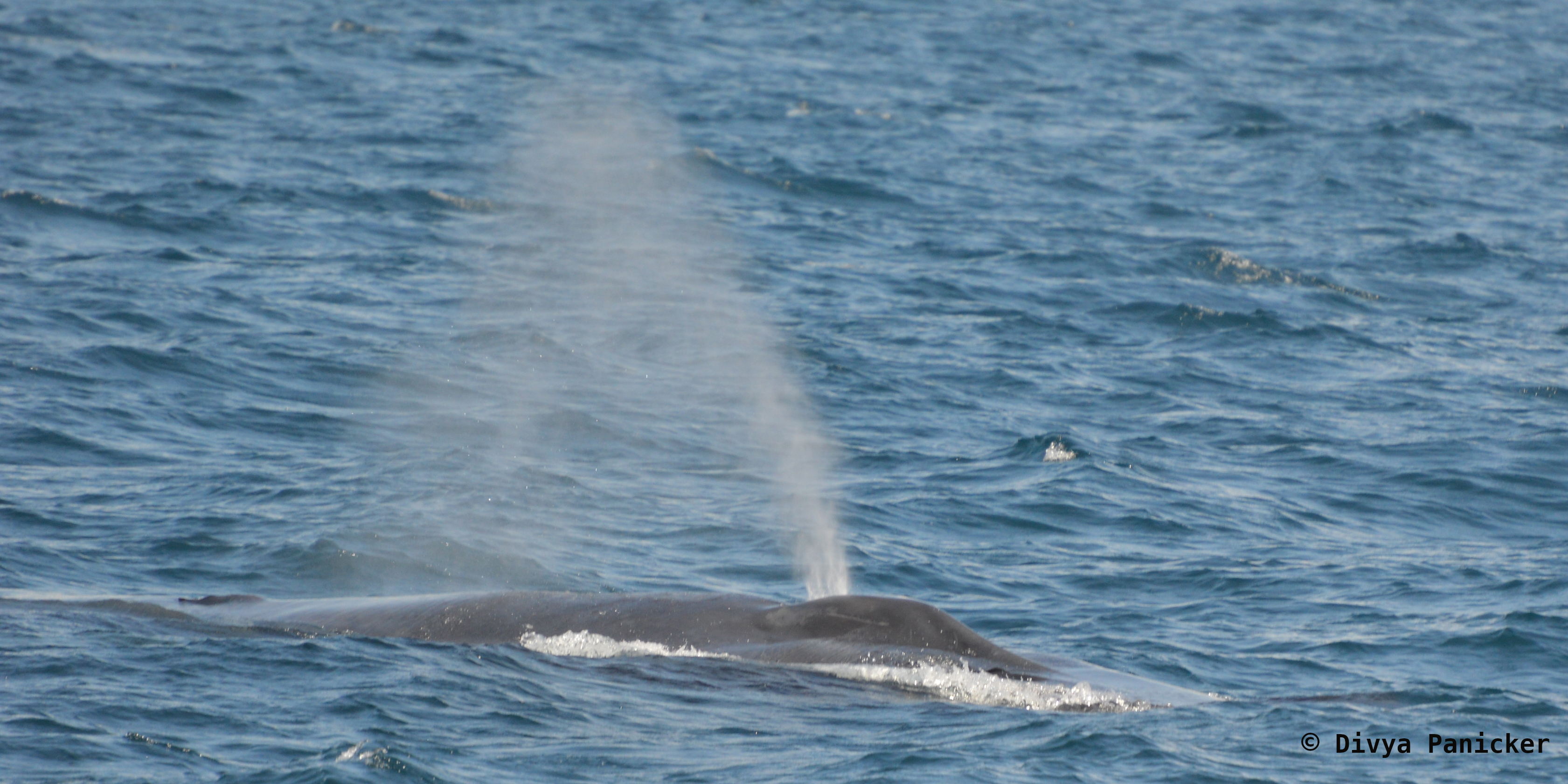
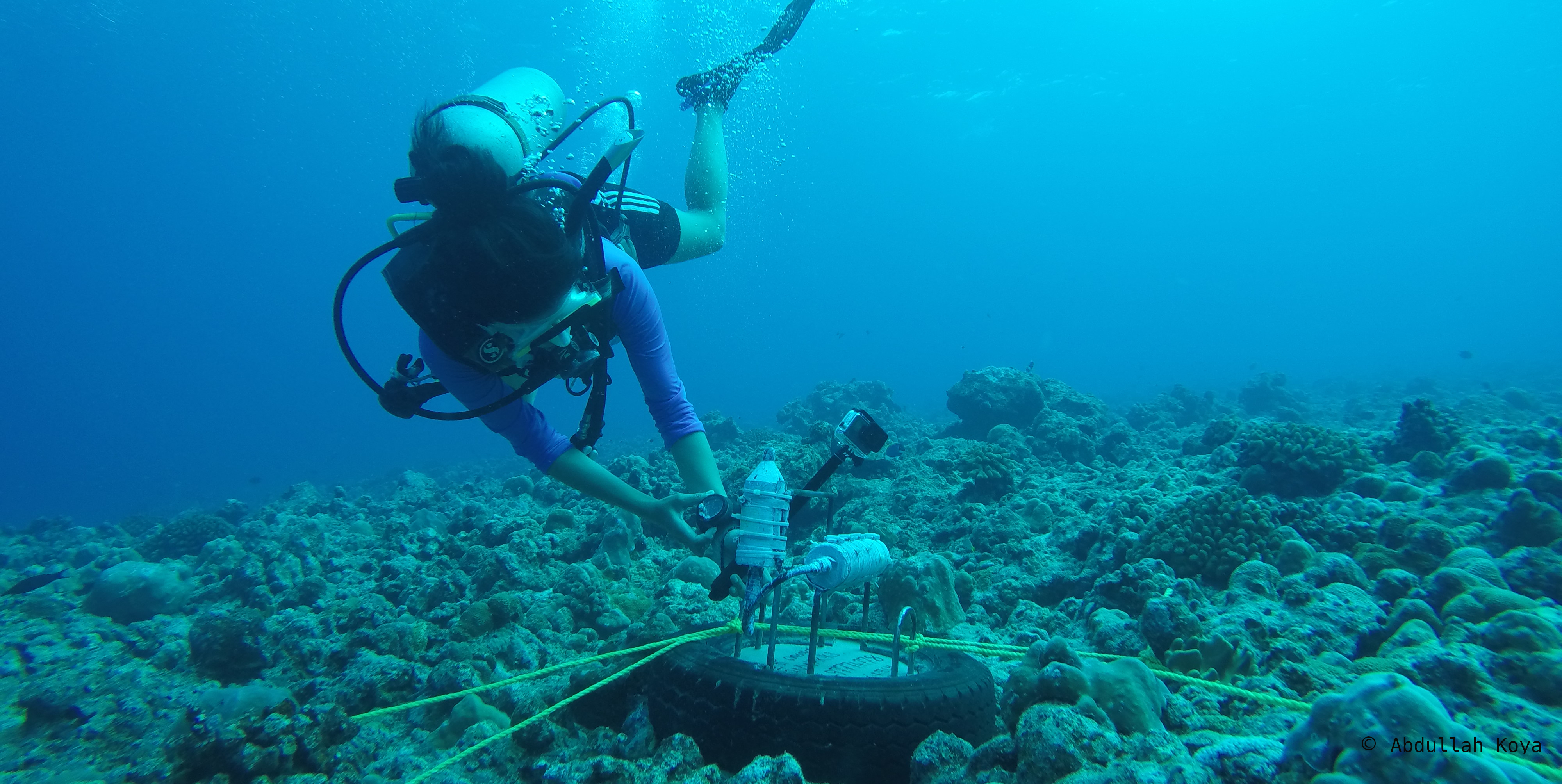
Blue whales (IUCN: endangered) in the Northern Indian Ocean (NIO) face numerous threats, from past whaling to current climate change impacts. The need for studies in the Arabian Sea and NIO is urgent due to the multitude of threats and rapid changes in these extraordinary tropical feeding grounds. This project aims to conserve pygmy blue whales (data-deficient subspecies) around the Lakshadweep archipelago through research, outreach, and policy engagement. Building on previous research (Panicker et al. 2020-2023), we will collect critical multi-year data on blue whale occurrence and seasonality, addressing key knowledge gaps. Using passive acoustic monitoring and advanced statistical techniques, we will analyse blue whale acoustic presence across time and space. The project will assess key anthropogenic threats, such as ship strike risk and noise pollution, and formulate mitigation guidelines. By providing findings and guidelines to local and national authorities and engaging the Lakshadweep community, we will drive informed conservation efforts. Leveraging blue whale research as a flagship for broader marine conservation, we will establish a foundation for future scientific efforts, ensuring long-term protection of blue whales in the NIO. Our plan includes laying the groundwork for continued monitoring and deep-water deployments beyond the grant period.
This project is funded through a direct grant to Dr. Divya Panicker from the Society for Marine Mammalogy.
- Assess the blue whale acoustic occurrence across a larger spatial area in Lakshadweep.
- Monitor blue whale vocalisations across multiple years within the Lakshadweep archipelago.
- Developing blue whale conservation strategies with local authorities and guiding policy at national and international levels.
- Cultivate community engagement and pride for blue whales in Lakshadweep.
This project is a long-term passive acoustic monitoring program using fixed underwater SoundTrap recorders at five sites across the Lakshadweep archipelago. Recorders were first deployed at four sites in April–May 2025. The network expanded and reconfigured to five sites in November 2025. Analysis of the first dataset is currently underway.
We co-organised the inaugural NCBS–Indica School of Field Ecology and Conservation marine field course on Kalpeni Island in February 2025, in partnership with the Department of Science and Technology, Lakshadweep, and funded by the Murty Trust. Fifteen PhD scholars from 12 institutions across seven Indian states — selected from over 100 applicants — received training in marine mammal ecology, bioacoustics, reef and seagrass ecology, intertidal ecology, mangrove restoration, oceanography, and scientific methods. Eight faculty from seven institutions taught alongside islander scientists who led several sessions; Master's students from the islands also attended selected classes.
Outreach efforts in Lakshadweep have included a presentation on whales, dolphins, and careers in marine science to 30 students at the Girls' Higher Secondary School, Kavaratti, and a radio programme by the PI on All India Radio Akashvani Lakshadweep titled Harithachinthakal – Blue Whale Songs in the Indian Ocean, broadcast across the islands.